
Pulse oximeter
On this page, you will find information about pulse oximeters.
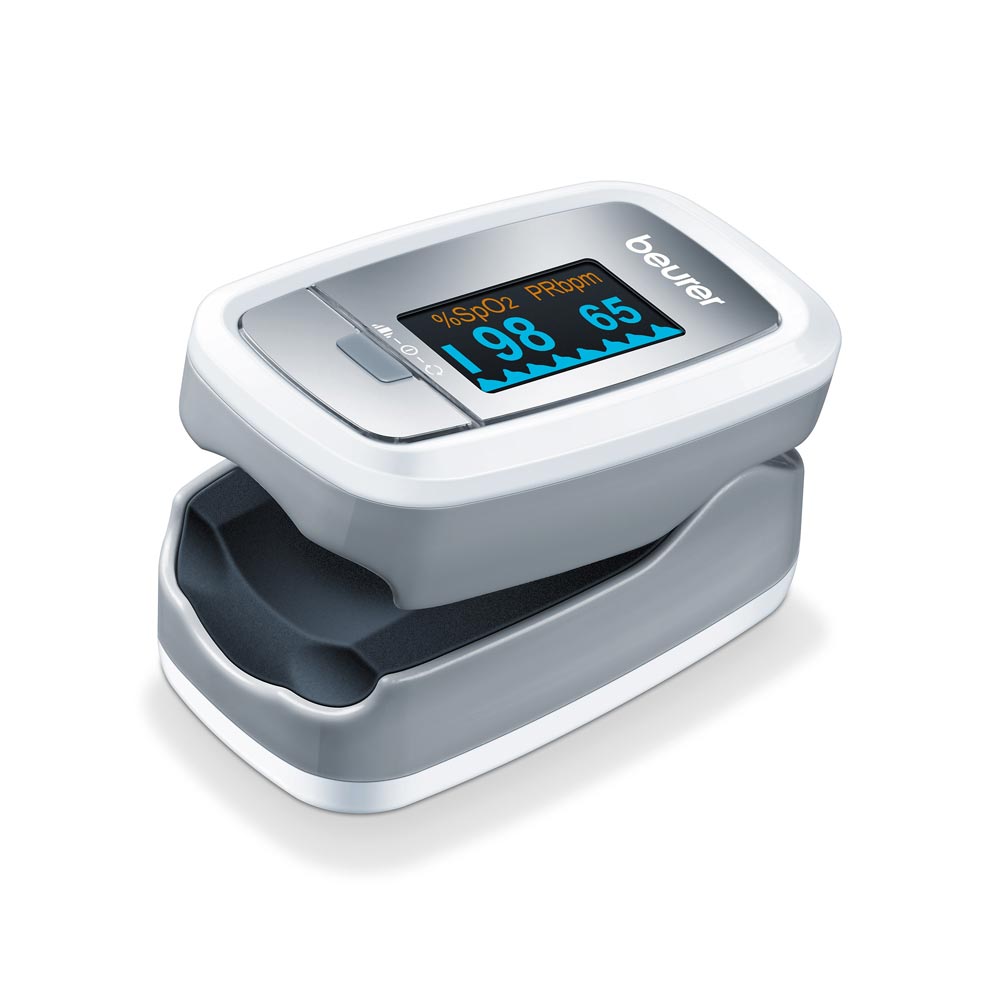
What is a pulse oximeter?
A pulse oximeter is a technical device for measuring the oxygen saturation of the blood and the heart rate. The measurement is non-invasive and is taken on a finger, toe, or earlobe. In newborns, the heel can also be used as the measurement site. The measurement is usually taken on a finger.
Since the measurement is generally non-invasive, it is completely painless for the patient. A clip, attached to a finger, for example, contains the sensor unit that performs the measurement.
Pulse oximeters - how they work
The sensor unit consists of two parts: a light sensor and a light source. This light source is located on one side and emits infrared light, which passes through, for example, a finger and is detected again by the sensor on the other side. The sensor then determines which portions of the light have been absorbed.
Light absorption is determined by the hemoglobin concentration and its saturation. Depending on whether hemoglobin has bound oxygen or not, it has different light absorption values. These known values can be used to determine the oxygen concentration of the blood.
Areas of application and use
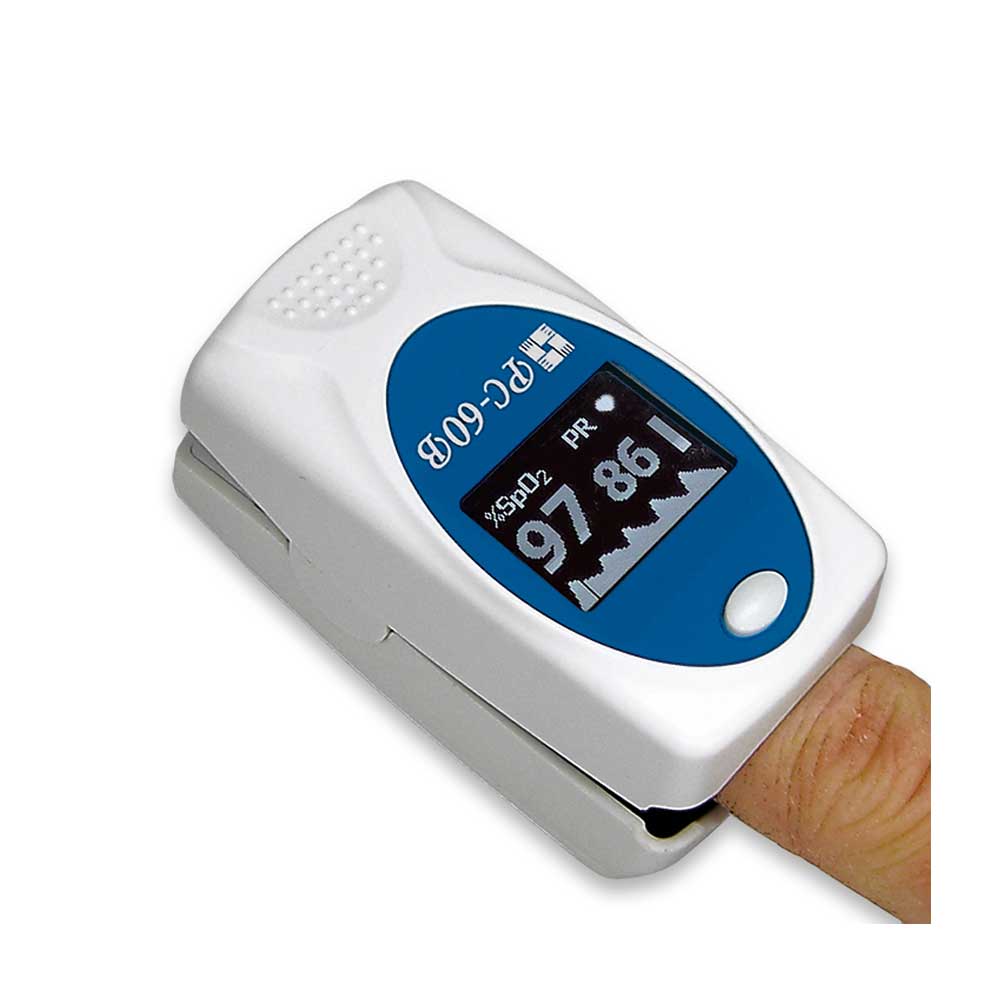
Pulse oximetry is very frequently used in medicine, among other fields. In emergency medical services and hospitals, pulse oximetry is part of standard monitoring.
Pulse oximetry is also often used for long-term monitoring in sleep medicine.
Pulse oximeters are also used for self-monitoring in sport aviation and mountaineering to prevent oxygen deficiency or altitude sickness.
Points to note:
Since pulse oximetry is mainly performed indirectly, it is generally more susceptible to interference than a direct measurement method. The following factors can therefore distort or even prevent the measurement results:
- Painted or artificial fingernails cause light reflections that distort the measurement result.
- Patients in shock or suffering from hypothermia often have inadequate peripheral circulation or insufficient capillary circulation, so pulse measurements are not meaningful in these cases.
- In the case of carbon monoxide poisoning, the device does detect hemoglobin saturation, but the hemoglobin is then enriched with carbon monoxide, not oxygen.
If these points are taken into account, a pulse oximeter will provide reliable and meaningful results.
Of course, you will also find a selected range of pulse oximeters in our shop.


