
Fixation dressings
Fixation bandages are applied during wound care to securely hold the wound dressing in place. At the same time, a professionally applied fixation bandage has a compressive effect, which is why this type of bandage is also suitable, for example, for compression treatments for venous leg conditions. Injured body parts can be immobilized using fixation bandages.

Furthermore, the fixation bandage provides an additional barrier against germs and protects the wound area from external influences. Correctly applied fixation bandages therefore support the healing process. Read more about how to apply these bandages correctly in our blog.
Because fixation bandages distribute pressure over the wound area very evenly, they help prevent conditions such as wound-edge edema, which could significantly slow the healing process. After skin grafts, the wound dressings are also secured with moderate compression.
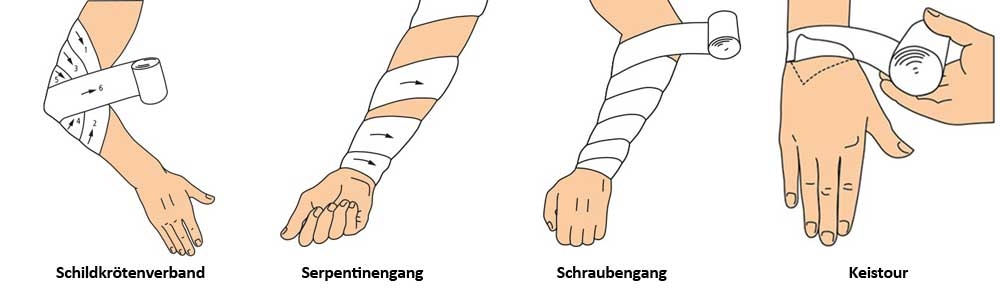
Fixation bandages have another function: In the case of weeping and exuding wounds, they may need to absorb any excess exudate that escapes. Modern dressing materials are usually highly absorbent; nevertheless, saturated dressings must be changed immediately to prevent the proliferation of germs.
Fixation bandages are non-sterile dressing materials. They must never come into direct contact with the wound. Non-elastic bandages are generally used on large areas of the body, such as the torso, as well as on the arms and legs. Highly elastic bandages, which preserve the mobility of the limbs, are recommended for the hands and feet or joints.
Incidentally, splints, padding, and cold packs can also be securely attached with fixation bandages.
Our range includes a wide variety of fixation bandages, such as Peha-last fixation bandages from Hartmann and the elastic, cohesive fixation bandages from Medicalcorner24.
You can find more information about fixation bandages and their use in our blog post How to apply fixation bandages correctly.


